
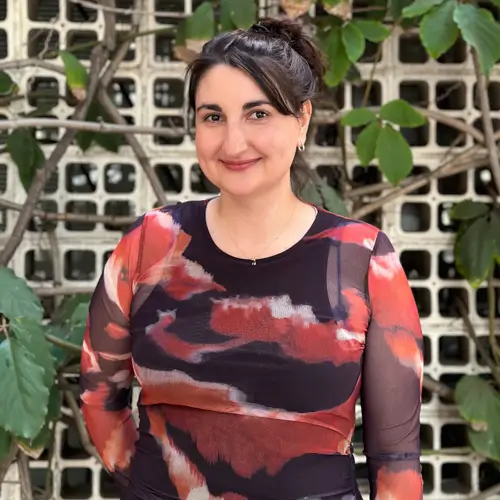
Lilyana is a postdoctoral fellow at the UCLA-CDU Dana Center and in the department of Neurosurgery at UCLA. She received her Ph.D. in Philosophy from Emory University in 2021. Her dissertation, “Contested Illness and Embodied Knowing: On Medical Gaslighting as Epistemic Injustice” foregrounds patient perspectives on medical error, diagnostic delay and illness dismissal to give an account of medical gaslighting as a systemic and pervasive form of epistemic injustice. As a postdoc, her work focuses on the research ethics of brain computer interfaces (BCI), specifically visual cortical prostheses (VCP). Outside of the lab, Lilyana can be found hiking on the many wonderful trails in Southern California, doting on her two cats, or experimenting in the kitchen.
My research critically examines ableism within neuroscience and neurotechnology. Despite broader recognition of the harms of other “-isms” (e.g. racism, sexism) ableism remains widespread and underappreciated in medical and neuroscience research. Implanted neurotechnologies are developed exclusively on disabled participants, yet this research often fails to center their knowledge, preferences, values, and lived experiences. Furthermore, neurotechnologies are frequently hyped by appealing to their curative potential to transcend disabilities despite limited current evidence supporting these claims.
In the first year, I theorized frameworks for meaningful participant engagement in early phase neurotechnology research. I also started and facilitated a reading group on disability at the Dana Center.
Building on this foundation, my second year project will critically analyze ableist attitudes within neuroethics literature. Specifically, I will examine how neuroethical discourse can perpetuate harm by: 1) invoking tragic narratives of disability to inflate the perceived value and efficacy of experimental implanted neurotechnologies, 2) engaging with speculative scenarios (e.g. super soldier disenhancement) that divert attention from pressing real-world concerns of current disabled users, and 3) relying on underdeveloped philosophical constructs of agency, autonomy, and selfhood without sufficient engagement with relevant philosophy and neuroscience literature.
By examining whether noise-limited natural contexts are more likely to promote brain processes conducive to wakeful consolidation than urban environments, this research aims to uncover the mechanisms linking environmental factors to memory while highlighting the potential benefits of equitable green spaces in our communities.
PI: Jesse Rissman, PhD