
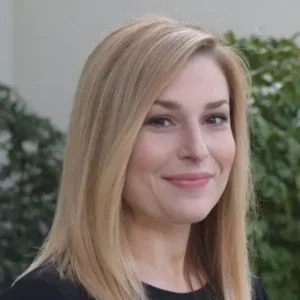
Dr. Ashley Feinsinger is an Assistant Professor and the Frances O’Malley Endowed Chair in Neuroscience History in the Department of Neurosurgery in the David Geffen School of Medicine at UCLA, and affiliated faculty in the Center for Social Medicine and the Brain Research Institute. She received her PhD and MA in philosophy from UCLA, specializing in philosophy of language. Her research examines the relevance of various philosophical frameworks for ethical medicine and neuroscience, with a current focus on the concepts of participant engagement, doctor-patient communication, and benefit in medical research. She is also the Ethics Theme Chair for medical education at DGSOM where she leads conceptual, practical, and experiential ethics training, and Co-Director the UCLA-CDU Dana Center for Neuroscience and Society, where she leads the neuroscience and society fellowship.
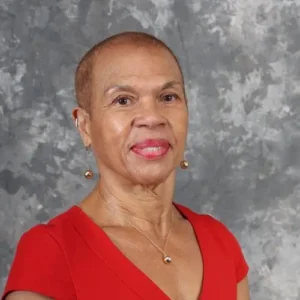
Denese Shervington has an intersectional career in public health and academic psychiatry. She is the Chair of Psychiatry and Professor at Charles R. Drew University. Dr. Shervington has held Clinical Professorships at Columbia University and Tulane University. She graduated New York University School of Medicine, holds an MS of Public Health in Population Studies and Family Planning from Tulane University School of Public Health, and completed her residency at UC San Francisco. She is certified by the American Board of Psychiatry and Neurology. A Fellow of the American Psychiatry Association (APA), she is a recipient of the APA’s Award for Excellence in Service and Advocacy and the Jeanne Spurlock Minority award. A member of the American College of Psychiatrists, she serves on the Psychiatry Resident-In-Training Commission. Dr. Shervington is the author of Healing Is the Revolution, a guide to healing from historical, intergenerational, interpersonal, and community trauma, and hosts the podcast of the same name. She is the proud parent of Iman and Kaleb, and has three grandchildren – Ayelet, Hadassah, and Yoav.
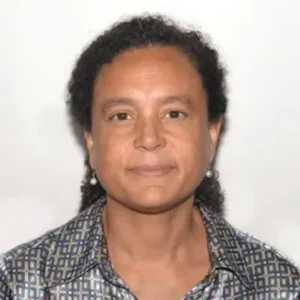
Helena Hansen is a Professor and Interim Chair of Psychiatry and Biobehavioral Sciences at UCLA’s David Geffen School of Medicine and Interim Director of the Semel Institute for Neuroscience and Human Behavior. She is the author of over 100 articles in leading clinical and social science journals, and of three books: Addicted to Christ: Remaking Men in Puerto Rican Pentecostal Drug Ministries; Structural Competency in Medicine and Mental Health: A Case-Based Approach to Treating the Social Determinants of Health (with Jonathan Metzl); and Whiteout: How Racial Capitalism Changed the Color of Heroin in America (with Jules Netherland and David Herzberg). She has received numerous awards, including an honorary doctorate from Mount Sinai School of Medicine in New York, and election to the National Academy of Medicine.
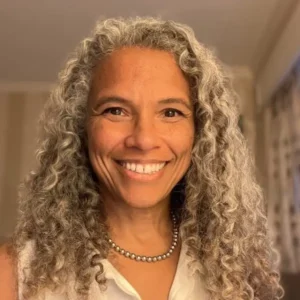
Gina Poe is a neuroscientist and sleep researcher who was born and raised in Los Angeles. She has a research laboratory that studies how memories, emotions, and cognition are served by sleep and how these things are impacted by disturbed or maladaptive sleep. Graduate students in her lab are examining how stressful memories are put to rest during sleep, how we gain insight through sleep in the right place at the right time, and how restful sleep can prevent cognitive problems and addiction. Her work has been featured in major podcast interviews, on Netflix and NOVA, and in talks delivered around the world. At UCLA she also prepares dozens of undergraduates to enter the STEM workforce through funded research experiences and going to grad school as the Chuck Lorre Scholars Program endowed faculty chair. Dr. Poe has a deep love of Los Angeles and is excited to interact with others bringing neuroscience and the community together.
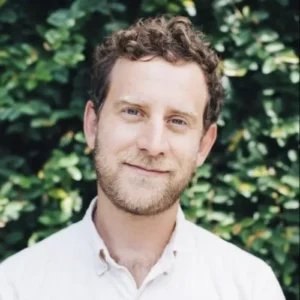
Nicholas Shapiro is an associate professor of biology and society at UCLA. He was trained as a medical anthropologist at Oxford, and cross-trained through postdocs in environmental monitoring and Indigenous feminist research methods. Shapiro publishes across anthropology, public health, environmental engineering, and public facing venues. His research and teaching have been recognized with numerous honors, including the 2024 UCLA Public Impact Research Award, the 2021 Chancellor’s Award for Community-Engaged Scholars. He directs the Carceral Ecologies lab, advancing research at the intersection of environment, health, and justice.
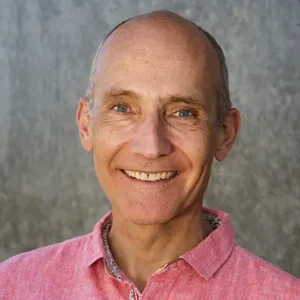
Dr. Schweizer was born in Basel, Switzerland and conducted his graduate research in the laboratory of Prof. Max M. Burger under the direction of Dr. Theo Schafer. He received his PhD degree in biochemistry summa cum laude from the University of Basel in 1989. From 1990 to 1994, he was a post-doctoral fellow in the Department of Molecular and Cellular Physiology at Stanford University in the laboratory of Prof. Richard W. Tsien. From 1994 to 1998, he was postdoctoral fellow in the Department of Neurobiology at Duke University in the laboratory of Professor George J. Augustine. Dr. Schweizer joined the Department of Neurobiology in the David Geffen School of Medicine at UCLA in 1998 as Assistant Professor and was promoted to Full Professor in 2010. Dr. Schweizer’s research interests concern the molecular mechanisms by which neurons communicate, the regulation of communication by neurons and how alterations in neuronal communication might contribute to neuronal diseases. The Schweizer laboratory uses electrophysiological and optical tools to investigate the dynamic molecular mechanisms underlying the regulation of neurotransmitter release. We are particularly interested in the role of protein ubiquitination in regulating neuronal excitability and synaptic transmission. In collaboration with Dr. James Wohlschlegel, we used multiplexed SILAC and identified synaptic proteins that are dynamically regulated. More recently, in collaboration with Dr. David Krantz, we are using pesticides linked to neuro-degenerative disorders as unbiased tools identify novel pathways that might be involved in early signs of degeneration. In addition, we are characterizing transmission at the first synapse of the vestibular system, i.e. between utricular sensory hair cells and primary afferent neurons. In collaboration with Dr. Larry Hoffman we are finding that changing the gravitational load alters synaptic structures. We are now using serial EM and EM tomography in addition to physiology and cell biology to define in more detail the transfer function between head-movement input and afferent nerve-firing output.
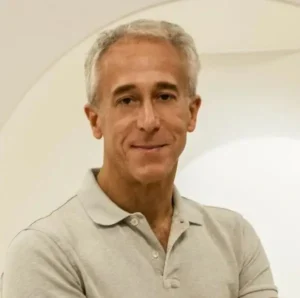
Marco Iacoboni is Professor of Psychiatry and Biobehavioral Sciences at UCLA’s David Geffen School of Medicine and Director of the Neuromodulation Lab at the Ahmanson-Lovelace Brain Mapping Center. He is the author of over 150 peer-reviewed research articles, more than 50 book chapters, and the general reader book Mirroring People: The Science of Empathy and How We Connect with Others. His work focuses on neural systems and functional mechanisms of social cognition, specifically how we perceive and connect with other people. Current work in his lab uses biological motion, virtual reality, brain imaging, and non-invasive brain stimulation to modulate implicit bias toward other people.
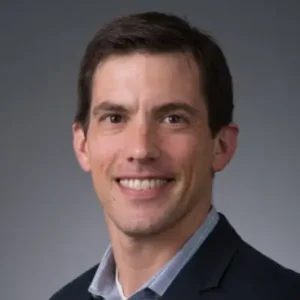
Aaron Panofsky is the Director of and a Professor in the Institute for Society and Genetics, as well as a Professor in Public Policy, and Sociology. He is a sociologist of science, knowledge, and culture with a special interest on the history, intellectual organization, social dimensions, and ethical implications of genetics.
His award-winning book Misbehaving Science is a history of the field of behavior genetics that explains how the way scientists have dealt with successive episodes of controversy have shaped the field’s culture and organization and limited its intellectual possibilities. He has also written critically about attempts to apply behavior genetics to problems of social policy and education and researched how genetics is transforming the concept of race. His work has been supported by the National Science Foundation, the National Institutes of Health, the Carnegie Foundation, the Robert Wood Johnson Foundation, the Sloan Foundation, and the Templeton World Charity Foundation.

Iman Shervington is the Sr. Director of Media & Communications at the public health non-profit the Institute of Women & Ethnic Studies, and the founder of Fifteenth Point, a consulting firm that works at the intersection of media, design, and communications. She holds a BA from the University of Southern California and an MFA in Film from Columbia University. Iman has created many short and feature-length films, often within the “entertainment education” format; designed and implemented health prevention programs; developed multiple social marketing campaigns; led various Human Centered Design projects; and presented at over 15 conferences. In 2016 Iman participated in Spitfire’s Executive Training program and the Robert Wood Johnson Foundation’s inaugural Culture of Health Leaders programs, and in 2024 her edutainment projects Are You Ready? and New Nickels won silver Anthem Awards. Iman has further experience in narrative change, strategic communications and brand strategy, community-engagement and community-engaged practices, and curriculum development.

Ellie Garibay brings a strong background in higher education administration, operations, and collaborative program management to the directorial team of the Dana Center. She joins from UCLA’s Anderson School of Management, where she spent nearly eight years supporting the Office of Inclusive Excellence and the Inclusive Ethics Initiative. In that role she partnered closely with behavioral scientists focused on communication, negotiation, and ethics, helping bring their vision to life through operations, finance, and program management. Ms. Garibay has led signature events and large-scale programming, overseen departmental budgets and fiscal planning, and built the administrative infrastructure that keeps ambitious academic work running smoothly. She received her BA in Business Administration and her MBA with a concentration in Project Management, both from Mount Saint Mary’s University in Los Angeles.
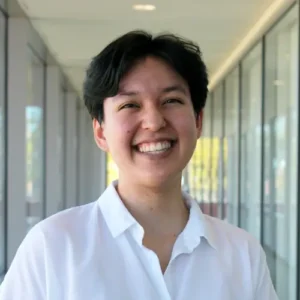
Erin “Rin” Ewalt is the Fellowship Program Manager for the Dana Center as well as a Financial Services Analyst for the Brain Research Institute. She has previously worked at other higher education institutions such as Claremont McKenna College and USC, and her work focuses in administrative support, financial reporting, and program planning. Prior working in higher education, she held jobs in elementary school education and in video game design. She completed her undergraduate degree studying Communication, Linguistics, and Business at USC.
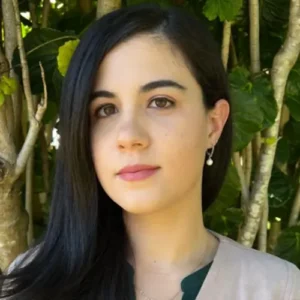
Amanda Ponce, MSPH, is a Program Manager for the UCLA–CDU Dana Center, where she oversees public health initiatives, strategic planning, and cross-sector collaborations. Her work centers on advancing health equity and improving outcomes for underserved populations through data-driven program design and community-based research. Amanda brings over five years of experience managing clinical and behavioral health studies, developing grant-funded programs, and ensuring regulatory compliance. Her research interests focus on social determinants of health, intersectional disparities, and translational strategies that bridge community and academic partnerships. She earned her Bachelor’s degree in biology from the University of North Carolina at Chapel Hill and her Master of Science in Public Health from the University of Miami. Amanda is fluent in Spanish and committed to integrating inclusive, evidence-based approaches into population health programming.

Sheila is a Policy Analyst at UCLA Department of Integrative Biology and Physiology and leads the undergraduate education initiatives for the UCLA-CDU Dana Center.