
|
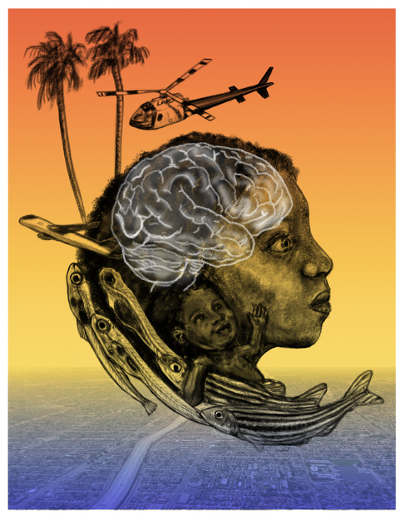
Overall, our lab is interested in understanding the genetics of brain development and how environmental stressors and experiences shape this process. During early critical periods of development, the brain relies on both genetic programs and environmental stimuli. This period of life up to ~5 years old is crucial to establishing the brain cells, regions, and circuits that will influence behavior and social interactions for the rest of one’s life. Genetic or environmental disruptions to these processes may lead to neurodevelopmental disorders or susceptibility to later-onset neuropsychiatric conditions. While much attention has been paid to genetic disorders and to quantifiable chemical exposures, much less research has been dedicated to understanding how the complex interplays of environmental stressors, such as extreme heat and sound environments, in early development may affect lifelong brain development for all people. Importantly, there is an urgent need to address the growing realities of extreme heat and noise that disproportionately affect communities living in marginalized zones, whose inability to move away from one or both of these environmental impacts may have lifelong neurological effects. We are further interested in understanding how these environmental stressors interact with pharmacological agents that people need to survive. To address this need, our work aims to integrate basic biological studies (using zebrafish as a model) with community-based participatory and engaged research in South Los Angeles. Our ultimate goal is to advance and develop basic neuroscientific knowledge stemming directly from community members’ experiences, to be used for direct education and policy advocacy with, by, and for South Los Angeles community members and beyond.


Community Collaborators:
Other Team Members: